Author: blogshimself

  • Various – Hardcore Osaka E.P (1997)

    Various – Hardcore Osaka E.P (1997)

    Alternative title: “I found one of the holy grails of Japanese gabber and all I got was another record in my shelf”

    When I boarded the plane back from Tokyo to Berlin, there were between 40 and 50 records in my luggage. I bought that many because I wanted feel like I truly cherished the record buying opportunities that Tokyo, probably more than any other city on that planet, has to offer. But if I am honest, not many of those were records I could have only gotten in Japan. The majority of the purchases pushing me over Spring Airlines’ strictly enforced weight limits was pressed in Europe or the US. 

    There was stuff that I already wanted or that I would have found interesting wherever I came across it. Many of the records were extra cheap due to the weak Yen, and I loved getting them with the extra patina of having brought them home from Tokyo. Also I was on a spending spree. I had bought a new suitcase to fill it up, not to come home with it half empty. I had 2.000 € of possible overdraft in my bank account and I was going to use every penny. So why not buy every random Dance Mania record I was able to get my hands on?

    Still, there were some records I got in Tokyo that I would have never found elsewhere – for example Izumi Kobayashi’s “Tropicana”, this strange and amazing house compilation that apparently celebrates the opening of a new club in Osaka in 1993 or this odd hard house EP about drinking beer.

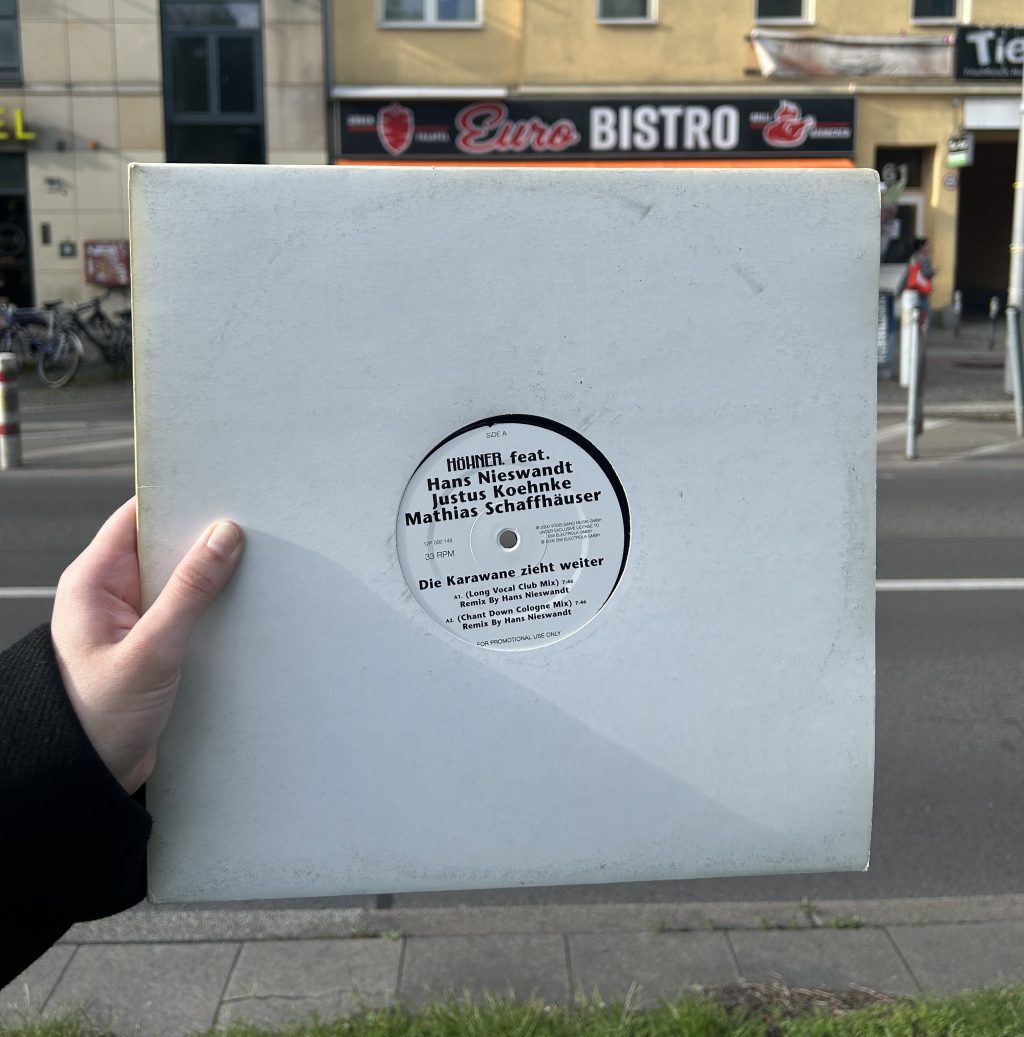
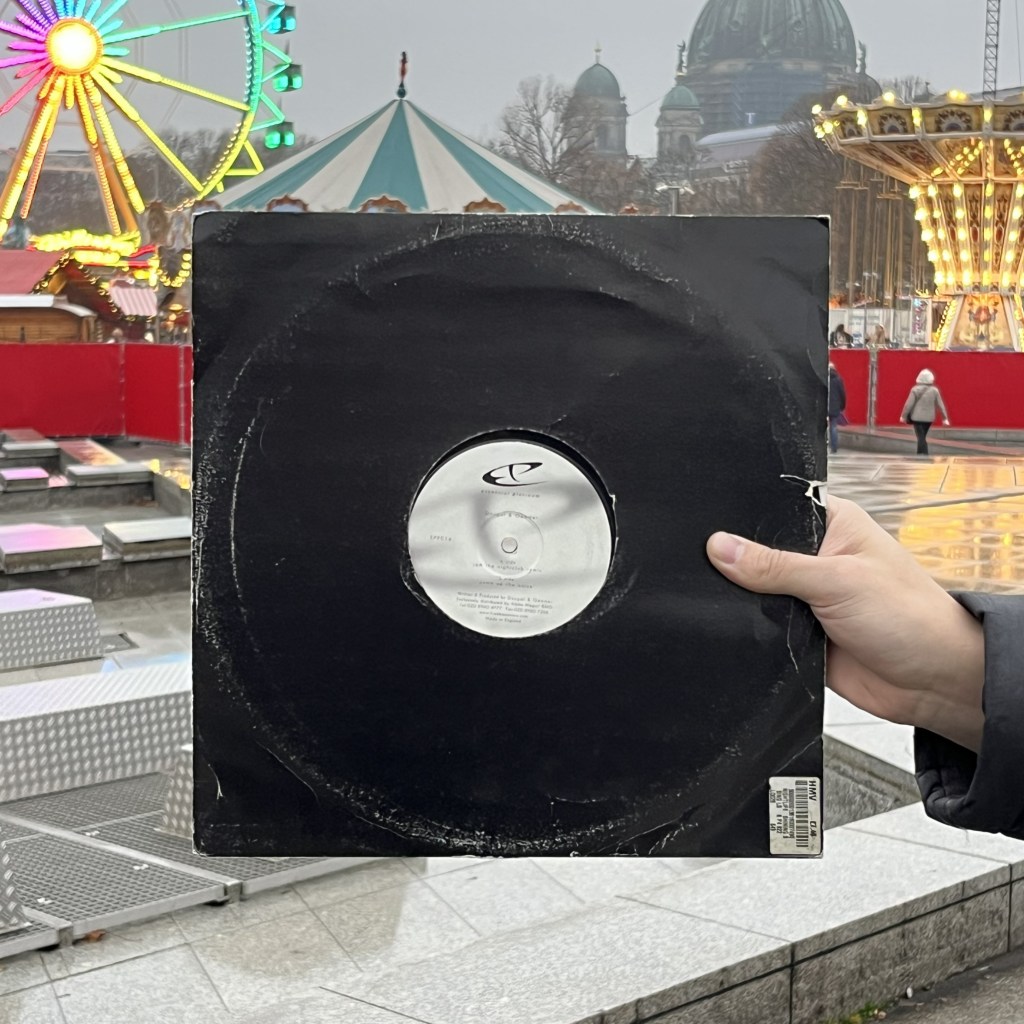
    But my most cherished proper Japanese souvenir on wax wasn’t any rare Shibuya Jazz-Funk, melancholic City Pop or even oddball House, it was a Gabber 12” called the “Hardcore Osaka E.P”, which waited for me in Shimokitazawa’s Disk Union, which is a truly magical place.

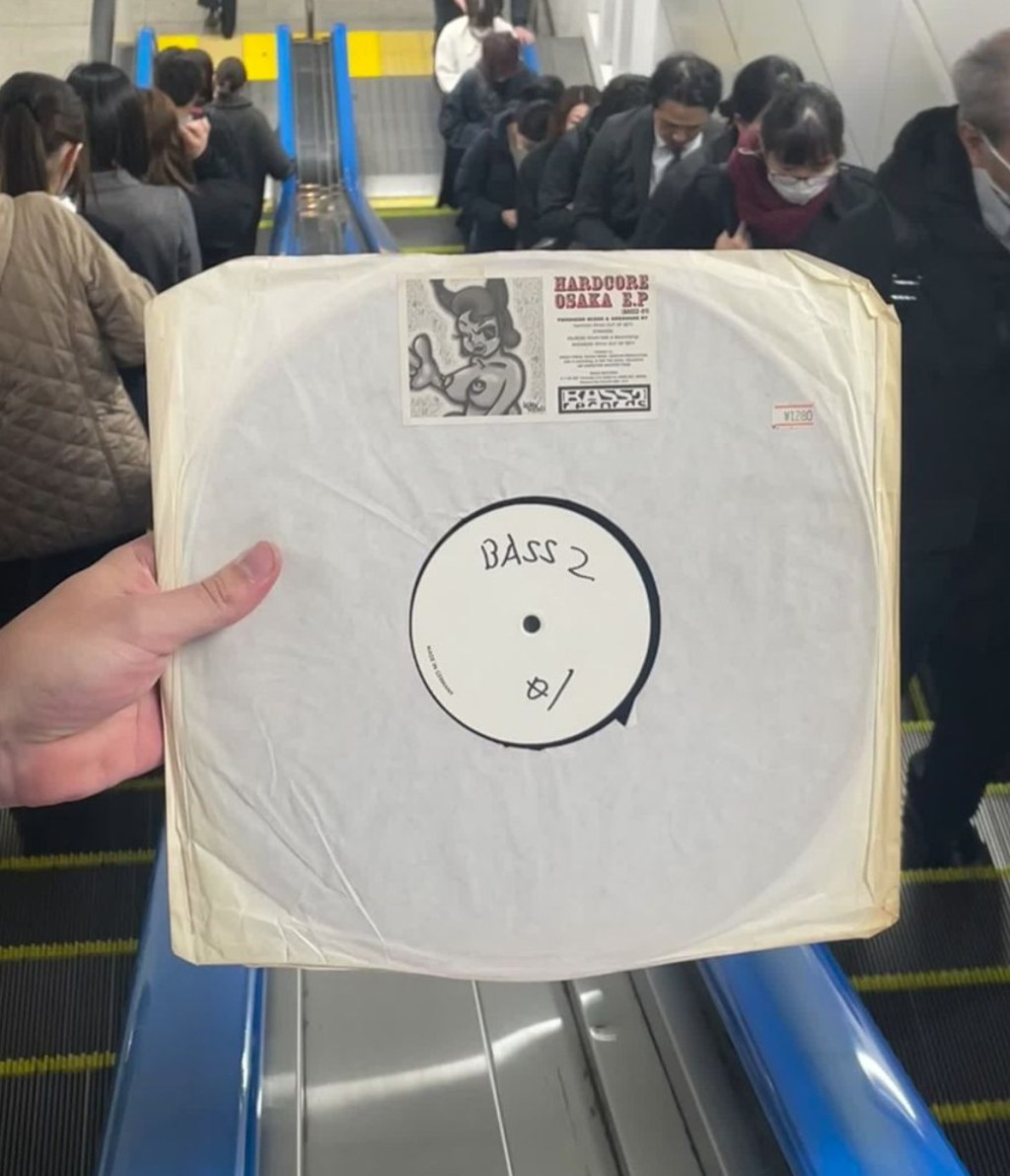
    An unmarked white Label with a stickered paper sleeve, I was immediately stricken by the name paired with a steep price tag (I think this record set me back around 60 Euros). And once I saw a shoutout to legendary German 90s producer Speed Freak on the small sticker on the generic sleeve next to a crude drawing, I knew that I would probably have to take this bad boy home with me. 

    Gabber? I hardly know her!

    I’m not usually one to splurge on Gabber records. Sure, I love a lot of genres surrounding Gabber, there are many Gabber records in my collection, and I own more than one item of Thunderdome merch, but I would not dare consider myself an expert in the field. Don’t get me wrong: I know what I like within Gabber when I hear it. But I struggle to identify certain strains, trends and eras. I’m often not sure I could tell a Lenny Dee track from one by the Dream Team or Marc Arcadipane. And I couldn’t tell a Gabber track from Rotterdam to one from Frankfurt or Glasgow or, well, Osaka.

    To be fully honest: When I first listened to the record I was disappointed. I hoped that with a name like “Hardcore Osaka” the contributors Oilhead, Stingers, Waxhead and Yam Yam – all of whom were and occasionally still are active in Japan’s Hardcore scene – would opt to infuse the four tracks with an unmistakable “Japaneseness”. Whether that meant vocal samples in Japanese or Koto chops or whatever, I’m not sure what I imagined. 

    Unfortunately that isn’t the case. “Hardcore Osaka” uses tried and tested samples, classic vocals and rave stabs. Fortunately, “Hardcore Osaka E.P” does not need its regional novelty to stand up to its peers from the other side of the globe. Each of its four tracks is a perfect distillation of some of the trends that shaped the genre’s trajectory in Europe. From Speedcore-adjacent hectic aggressiveness (See A1 for example) to impossibly catchy rave simplicity.

    Also the vocal in track B2 sounds like it’s saying “Fuck DJ Hörde”, which gave me yet another reason to throw myself into the icy lake and spend 60 Eurinos (DJ Hörde is an amazing DJ & producer & m8 of mine who you should check out!).

    Another reason why I had to buy this record – I’m not gonna pretend that it didn’t matter to me – is that this is clearly an extremely rare and sought after record. If it wasn’t for the fact that this is a very pricey piece of DIY history by some Japanese guys, a record of which according to Discogs only 200 copies exist, only 120 of which were commercially available, a record that has gone for 500€ on Discogs in the past with no copies currently available, I’m not sure I would have splurged, even if I do love the music. But it is, was, has, and I did, and I couldn’t be happier to own this holy grail of Japanese Gabber!

    (Funny side note: The white label says it’s “Made in Germany”. Would love to know the background to this. Did Japanese pressing plants in the 1990s not want to press this type of music? Did they not have capable engineers for cutting and mastering? Or was this a general thing for 12”s released by Japanese labels in the 1990s? I saw that catalogue No. 02 of the Bass2 label was pressed in Czech Republic by Gramofonové Závody, so it appears they were trying different suppliers.)

    To hakk or not to hakk

    Either way: Now would ideally come the moment in the text where I tell you about playing this one and the crowd erupting into ecstatic cheers. About flexing on some old heads with this unique piece of vinyl. About, well, some sort of satisfying conclusion. But I can’t, at least yet. At this point I’ve carried “Hardcore Osaka” with me to around 6 gigs in 3 countries without playing it a single time. I’m not sure why I’ve lacked the bravery to do it so far. 

    Maybe it’s because a lot of Gabber I love often doesn’t really translate well to a dancefloor because it lacks a low end compared to the Happy Hardcore I’d play alongside it. Maybe it’s because I’m subconsciously afraid to ruin this expensive record. After all, I have no qualms to scratch up a VG Hard Trance 1€ banger from the flea market and say “OToh I love when a record has lived” but I can’t pretend that it doesn’t feel different if that record would be a month’s rent.

    The closest I came to playing it was last December when my friends over at 16Pitch invited me to play their annual Christmas party at beloved Berlin basement/ fire hazard Zur Klappe. 16Pitch stands for vinyl only 170 plus bpm sets, and for packing out Klappe to its fullest capacity on a random Tuesday. While this crew is now content with throwing 1-2 parties each year, that just means their amazing and open crowd is even more hyped than usual, so I wanted to do something special.

    In the past, whenever I’ve played for that crew, I brought my tightest happy hardcore heaters in order to match the gang’s polished modern free tekno and DJ Henk’s dubplates of SoundCloud hard trance. This time, though, I wanted to do something special. Though I only had an hour I planned a little journey through hardcore history, starting with some proper awkward early nineties gabber vibes. From Hardliners’ “Give me a motherfucking breakbeat” to “Wonderfull Days” to Scooter’s “Crank it Up” this tangent was so much fun and I feel like the crowd was also fully on board – it was probably helpful that on Zur Klappe’s dodgy sound system my low-end-less Amiga-produced gabber didn’t sound all that different from the more modern stuff.

    Still, as fun as that journey was, “Osaka Hardcore” did not grace the turntables. But, it’s also nice to know that my copy of the record has not reached the climax of its journey yet. And if you’re ever in the crowd and you suddenly hear that classic “Amsterdam” sample come in, better give me some cheers and Hakk it up so I know it was worth it.

  • DJ Deeon – Induced EP (1995)

    DJ Deeon – Induced EP (1995)

    Alternative title: Going back to my roots, yeah!

    I have a confession to make: While writing my review for DJ Funk’s Pumpin’ Tracks EP I left out something crucial. When I bought it a year ago in Tokyo, I was excited to own it. But I actually wasn’t super excited to listen to it. I bought it more out of a sense of duty than actual musical interest. I know, I know, and I’m sorry.

    You see: Funk had just passed, you don’t see his records everyday, and I felt like my “career” as a DJ and producer is built on the back of Chicago legends like him. Our collective Raiders was founded on a shared love for the seminal Dance Mania label, for Detroit ghettotech and electro, for Miami bass and for Baltimore Club. Our parties were known for showcasing those music styles. Funk’s music, and some variation of “Pump It” was played at pretty much every event. I had to own that record. But did I really want to play it?

    Around that time, I was playing very different music in my club sets. It was mostly nostalgic happy hardcore, 00s hard house, energetic speed garage, some techno-adjacent trance, and the odd pop edit. I still love all of these styles of music. 

    But I also feel like I’m fully back on the sauce when it comes to the OG Chicago business that ignited my passion for fast, freaky and simple house music in the first place.

    Reigniting a passion through a mediocre gig

    My personal renaissance with the Chicago OGs started around last august when our collective did a takeover for Sensus festival, around 2-3h away from Berlin. This lovely small event by a tightly knit Berliner crew brings together the city’s electronic music nerds, graffiti writers, art school kids, and speed freaks on an abandoned airfield for a real family affair.

    Every meter I’d bump into friends, friends of friends, and soon-to-be friends in a way that made me feel at home like few other festivals have done before. I am also proud to call myself a resident of the Sensus these days but that’s another story.

    Either way: we took over a woody outdoor floor and invited some lovely friends, namely divas Camilla Rae and Hedda, who played incredible sets. But I was also looking forward to DJ Nortside and myself playing some ghetto house vinyl for the early shift to pay respects to the roots of our collective. That meant dusting off some of the old Dance Manias I hadn’t played in a while. 

    Honestly, the 2h set was fun, but it wasn’t stellar – in my memory it only really started catching the crowd once we moved away from our scratched up Chicago records and started playing more eclectic modern club tracks and electro. However, the whole process of preparing for this set and witnessing Nortside’s amazing bleepy selection really got me fired up. I was keen to dig into that music again. And to also go beyond the classic bangers driven by raunchy repetitive vocals that dominated my collection.

    Hold up, wait a minute!

    Fast forward to me preparing the texts for this blog, and I started writing about the DJ Funk EP (I had some footage from Japan about it after all), I became curious about the label behind it. What else had come out on Cosmic records, that odd UK label with the handwritten label designs, that had hosted some of ghetto house’s biggest stars comparatively early in their careers?

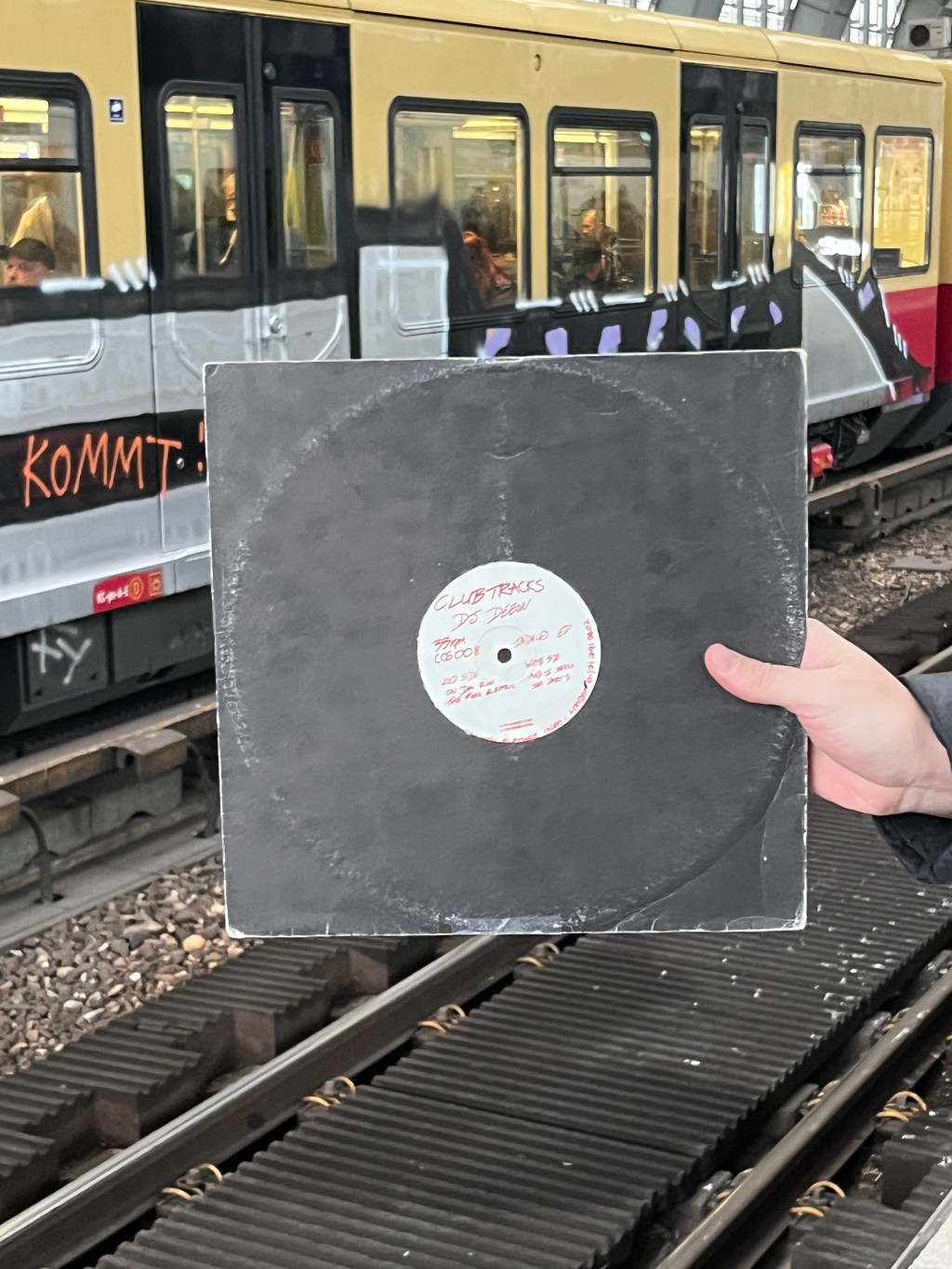
    I knew I had another record from the same label, DJ Milton’s “Hittin’ Hard EP”. I had dug it up ages ago while working at one of HHV’s Diggin Days events, and bagged it for free, of course. It’s one of these strong yet bleepy Chicago EPs which due to its lack of catchy vocals it never truly made the gigging rotation. Either way, looking into Cosmic I stumbled over DJ Deeon’s Induced EP, which is the focus of today’s ramble.

    The standout track, the one that made me want to actually write about Induced, is “On Da Run” – an incredible song which I have simply out of my head, and it’s been MONTHS. It consists of pretty straightforward drum programming and some delay-heavy vocal jamming, presumably by the man himself. It’s never really in pitch, it seems mostly improvised, and it’s among the best things I’ve ever heard. The whole track has a truly haunting and psychedelic quality to it that I just can’t shake. As simple as it is, it’s one of my favorite discoveries of 2025.

    Beyond “On Da Run”, “And I Sexxx” is another highlight. It delivers everything you want from a 1995 Deeon track: Catchy vocals, a simplistic bleepy melody, fat toms, and a fairly long arrangement making it a joy to mix. Tbh it doesn’t stick with me in the same way “On Da Run” does, given that it doesn’t have that vibe of someone chanting in a dense forest at night while you’re running for your life. But at the same time it’s probably much more compatible with most sets.

    “The Funk Electric” is a tightly sequenced drum machine workout without any melodies or vocals whatsoever, a real barrage of 909 toms. It honestly doesn’t make an impression on its own, but it probably kills as a tool to transition between two large vocals or melodies. “Sex Part 1”, finally, revolves around some chopped up wobbly synth sounds in different rhythms. It’s short, unfortunately, but if you like the type of ghetto house tracks that sounds like you’re shaking a thin sheet of metal – think time for the percolator – this one feels right at home.

    Why is this quartet of tracks one that I keep thinking about, that I keep playing at home and in club settings? I think it has something to do with the label responsible, which we should finally take a look at:

    Cosmic ghetto house music

    Cosmic Records, which released the Induced EP emerged from the club night called Lost, started by Techno legend Steven Bicknell and “infamous UK promoter” Sheree Rashit. Lost, “one of the longest-running and most respected underground techno nights in the UK” began in 1991 and grew a label extremity in 1993, which has remained active in various intervals until the mid-2010s (cool interview with Bicknell here). 

    While mostly a vessel for Bicknell’s own productions, Cosmic and Lost always maintained a strong connection with Chicago and Detroit, and was probably the first notable Euro-label to give a platform to artists from the emerging ghetto house sphere on its “Club Track” sublabel.

    After Funk’s Pumpin’ Tracks, the Discogs numbers of which look like those of a successful release, Cosmic saw EPs by Deeon, Milton and even Hip-House-hero-turned-Ghetto-god Tyree Cooper (his T.C.X. is one of the most stunning tracks I never get to play out). For those artists Cosmic is an outlier, given that around that time they mostly released on Dance Mania and occasionally other Chicago-based labels such as Rockin House, Underground Construction or DJ Funk’s own label projects

    One thing is for certain: these artists leaving the Chicago sphere at the time led to some great music. All of these Cosmic releases are absolutely worth seeking out. I’m projecting here but given that Lost was generally pretty tapped into European Techno, it makes sense to me that the artists would aim to use these releases to put out their more hypnotic and minimalist cuts, while keeping the sample-heavy party starters for Dance Mania et al. Like, I can understand why Deeon would release “On Da Run” with Cosmic as opposed to Dance Mania where it was originally supposed to come out.

    Tacking on a dance mania rant as if this isn’t long enough already

    If you’re into the Dance Mania sound you also know another reason to seek out these records besides the music simply being great. It’s because they weren’t released by Dance Mania.

    Let me put it this way: The more you enjoy the music put out by the label in the 1990s, the more annoyed you get with the often jarring decisions made by the label when it comes to their releases. Chief amongst their offences against DJs who love their music is their obsession with cramming too many tracks on each side of a record, meaning that these often already flimsily mixed and strangely mastered tracks lose the little punch they had to begin with, because there’s four of them on an EP.

    The label made countless head-scratching choices and it seems that each nerd has another record that they feel Dance Mania screwed up most – often by fading out the best track you ever heard after 2:50 minutes because they needed to squeeze something else on that record.

    Either way: This is of course complaining on a high level. Pretty much anything on that label past ~DM50 is historical. And if you are in the business of crate digging and chasing used 12”, you know that records by few labels are as consistently beaten up as those by DM (even in Japan!).

    Dance Mania’s decisions can be frustrating at times, but these records were being played and loved. They lived. But I am simply happy for us DJs but also the musicians that there are labels besides Dance Mania, labels like Cosmic records, that have put out out this incredibly forward-thinking and game-changing music at that time.

    RIP DJ Funk. RIP DJ Deeon. RIP Paul Johnson. RIP to everyone whose name isn’t up there. And finally I wanted to say Free DJ Milton but it appears that he is in fact back and released a track called “Let’s Juke” just a few months back! So Euro-promoters, do it like Cosmic did and bring these legends over the Atlantic while it’s still possible.

  • Space Cube – Kool Killer Vol 3 (1993)

    Space Cube – Kool Killer Vol 3 (1993)

    Alternative Title: Amateur Hour!

    There is a tendency among record people to obsess over the shittier version of something good. Of course you love the Beatles, but do you know there’s a 60s group of Surrey teenagers who contributed one track to a compilation of local rock bands that is recorded in a shed? Steely Dan is great but have you heard of that Swiss Library record that contains a 1:30m version of a pretty promising Disco-Jazz track? Sure, we all love Egyptian Lover, but have you heard of this Milwaukee Hip Hop crew fronted by a Scientologist that dropped one obscure 7” in 1985 about how crack is bad that now costs 1.800$?

    I’m half jestin’, but if I am honest, I am very much guilty of this. There are local Christian Funk bangers from tiny German labels that I like better than some objectively superior US classics. And I handily prefer the Rap-O-Clap-O version by Cora & die Popspatzen over the one by Joe Bataan. 

    If you’re a fan of a certain type of music there is simple pleasure in witnessing people imitating it and, while fucking up, developing a whole new type of sound. Call it outsider art or schadenfreude but certain ways of failing make your music special.

    Who cares about the rares?

    However: When it comes to fast-paced electronic music from the 1990s, this love for local amateurisms doesn’t seem to exist in the same way as it does in other genres.

    Sure: certain subgenres, especially tech-house and minimal, have embraced their regional weirdos, often hyping up rare oddball labels and quirky DIY-releases. You could argue that many of these EPs going through the digger-hype-cycle are simply serviceable takes on established genres that are somewhat interchangeable and rarely add much unique flavor. And that their desirability is rather derived from their rarity than their musical appeal. But at least people care.

    In the communities surrounding happy hardcore, rave music and jungle, people seem to care less, especially about music from beyond Great Britain. To me it seems that, the closer a track is to the original UK rave communities between 1990 bleeps and 1996 roller, the more likely that it’s gonna enter a kind of canon making it desirable to own and play. And everything that strays too far from that path is a failure that people don’t really care about outside of highly specific circles.

    As someone based in Germany who loves digging for rave music, this has put me in a predicament: I love the artists and labels that originated these sounds, but it’s pretty rare to stumble over a stack of Impact or Homegrown 12”s in the €-bin of a dusty Berlin antiques shop (though it does happen), because breakbeat hardcore and happy hardcore were simply not massively popular genres in Germany – at least compared to stuff like techno, acid, house and hard trance. And even within the niche genre of hardcore a lot of German stuff is much more adjacent to Frankfurt acid escapades and in full honesty a little stressful for me.

    Sure, if you know where to look there are loads of terrible major label euro trance records that house a pastiche “happy rave” remix with an amen break on the b-side to cash in on that particular craze between 1994 and 1996, and occasionally these are even sort of good! Sometimes there might even be a dilettante attempt at Jungle which I especially love – see this one for example by Jam & Spoon who are now much more remembered for their contributions to trance than their jungle experiments.

    So: the major labels were content with ticking some ravey boxes to market what I would endearingly call cheesy Euro-slop. Is that all there is in continental Europe?

    Any German jungle in guy?

    No! There were some magnificent pockets of nerds in the DACH region (Germany, Austria & Switzerland) that were inspired by the UK’s buzzing scenes, and that had the talent to not only imitate these genres but to add to them and as outsiders become part of hardcore history (not the podcast). 

    There are several examples for these types of artists that have earned the respect of their British peers, some of which I hope to cover on this page. I would have to mention the likes of Martin Damm (aka. Biochip C. or Speed Freak), Ilsa Gold, Atari Teenage Riot, and many more but in my view the real heroes are the subjects of today’s text, Space Cube.

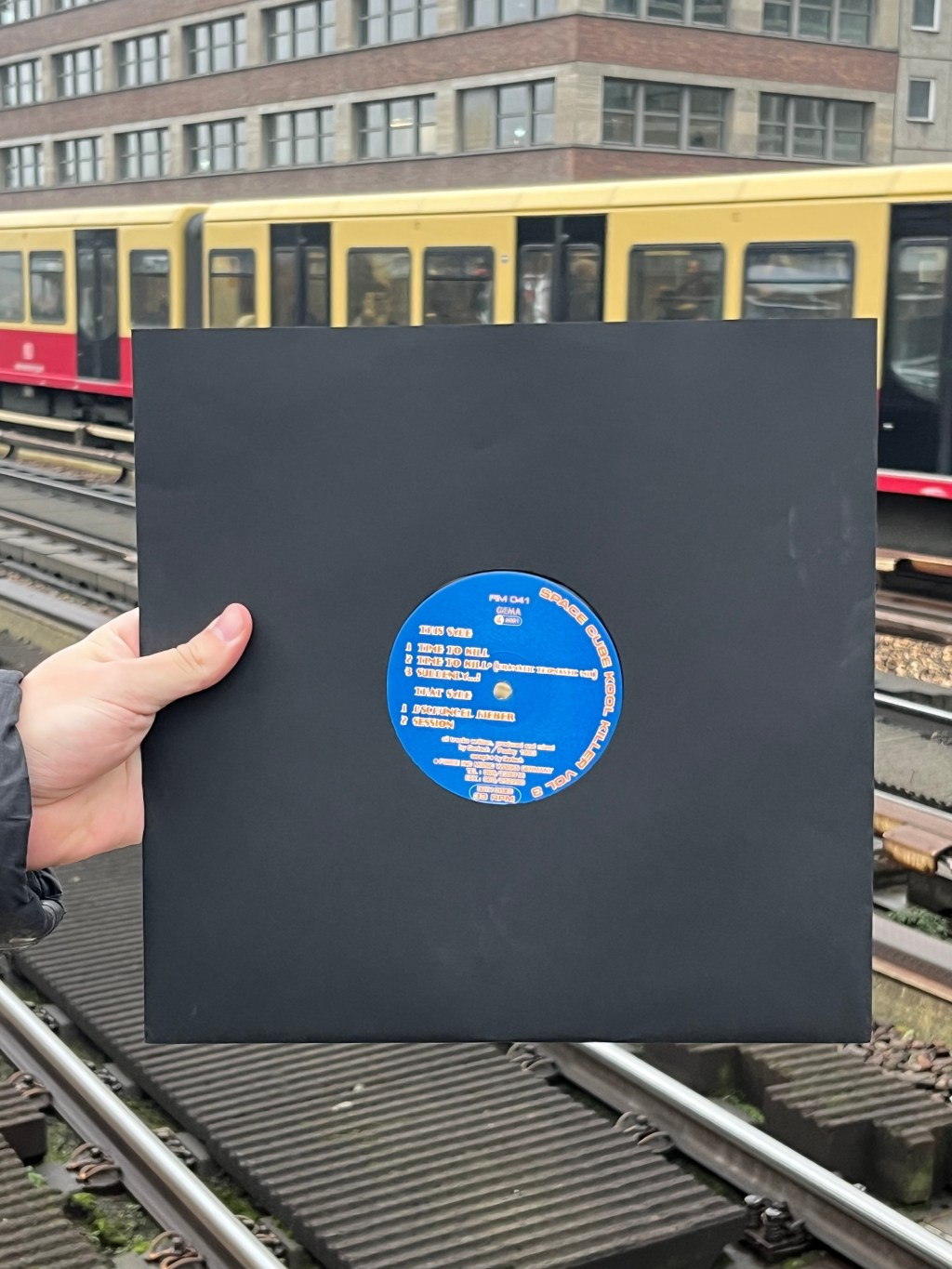
    Space Cube is a project by Ian Pinnekamp, later known as Ian Pooley, and Thomas Gerlach, later known as DJ Tonka. Both of them are now known as German house royalty with Pooley having done remixes for Daft Punk and Tonka calling himself “𝙶𝚎𝚛𝚖𝚊𝚗𝚢’𝚜 𝚏𝚒𝚛𝚜𝚝 𝚑𝚘𝚞𝚜𝚎, 𝟸-𝚜𝚝𝚎𝚙, 𝚓𝚞𝚗𝚐𝚕𝚎 𝚊𝚗𝚍 𝚍𝚛𝚞𝚖 & 𝚋𝚊𝚜𝚜 𝚙𝚛𝚘𝚍𝚞𝚌𝚎𝚛” in his IG bio. But before they became house-hold names haha with interviews on VIVA and chart listings, they had several joint music projects in their late teens and early 20s (between 1991 and 1996-ish), the most prolific of which was called Space Cube.

    I remember hearing them first when Young Lychee bought this one at AudioIn before Covid straight from the turntable of the person sorting through a new stack (this was before they established their protocol for new records) for 30€, which was an unbelievable amount to me at the time, but I still envy him for it. I truly fell in love with Space Cube later when I heard the classic track “Session” in this mix by Mathis Ruffing and Souci, you can still see my stunned 5 years old SoundCloud comment. 

    Crashin’ for a “Session”

    “Session” is the cult classic off of Space Cube’s “Kool Killer Vol 3”, which is the subject of today’s text in case you didn’t notice, and that’s truly justified. It’s so god damn fun and raw and DJ-able, and still gets a crowd going today with its Flavor Flav sample – sidenote: it’s funny how prominent Chuck D is sampled pretty much everywhere while I can hardly think of Flavor Flav samples in dance music – and its perfectly sorta-cheesy-but-not-too-cheesy Pet-Shop-Boys-sampling breakdown. See young Young Lychee and young myself having a ton of fun mixing it over here. As a Discogs-rando put it in 2006: “This is certainly one of German hardcore’s finest moments.”

    While “Session” is the objective standout of the EP, it has one problem: It’s so perfect that you’d never think it was made by a duo of 20 (!) year olds from Germany’s Main area. It fits so well between a Vibes & Wishdokta B-side or a DJ Sy banger that you’d never in a million years think that this wasn’t made by someone from Cornwall or Leeds or whatever. 

    That’s why I am also particularly fond of another track from Kool Killer 3, “Dschungelfieber”. It’s not that this track is any less professional, but with its use of German vocals it scratches that exact itch of wanting to find the German version of something cool, while still being incredibly competent.

    Cards on the table, though: I have to say I usually forgo the dark and acid-laden original version on Kool Killer 3 in favor of the duo’s own reimagining of the track on their remix EP on the legendary Riot Beats label. A guaranteed floor filler that will put a smile on people’s face not only through its Dschunglist vocals (If you know where they are from please write a message), but also through one of the most fiercely chopped breaks I’ve heard on a German release.

    Another highlight is “Time To Kill” with its iconic sample of Peter Schilling’s stellar 1982 NDW hit “Major Tom”. This one abandons Session’s boiled down ecstatic energy level in favor of a more cut-and-paste breakbeat rave approach that almost leans into slapstick. Through its more chaotic vibe this one feels a little more dated and its synth programming is more in line with some of the stressful German hardcore from that era. But as anyone who loves UK hardcore will be able to tell you: hectic mash-ups of absurd samples that shouldn’t work together but somehow do is also a staple of early British rave music that Pooley and Tonka nail perfectly.

    If this is something you’re interested in, I’d also recommend tracking down the other “Kool Killer” releases by Space Cube since they are a bit more on the mash-up ironic side of things with their unexpected samples and sudden switch-ups.

    Suddenly”, finally, is a great track, too, which has the unfortunate fate of having been put on a record with some of “German hardcore’s finest moments”. It’s very catchy and serviceable but I simply always forget it exists. Writing this text has made me keen to close a set with it, though, since it really is a perfect track for when the lights have turned on in the club and the people yearn for one final campy hug before heading to the train station.

    I could go on about Space Cube, about their other releases and about their home label Force Inc. (objectively the most forward thinking rave music label in Germany between 1992 and 1996-ish) forever, and I’m sure I will in future articles. And I’d also love to find out more about their relationship to that project given that they made all this amazing music when they were SO young, and their later polished music could hardly be more different from Space Cube’s raw, demanding, sometimes ironic, and not always DJ friendly edge. 

    For now I’ll just say: Do yourself a favor and hunt down an affordable copy, because there are few joys in life like teasing the beginning of “Session” a couple of times and then finally mixing it in. “JA BITTE”.

  • DJ Funk – Pumpin’ Tracks EP
(1994)

    DJ Funk – Pumpin’ Tracks EP (1994)

    Alternative title: How to blow an entire tour’s fees in 2nd hand 7th heaven

    In the beginning of 2025, Young Lychee and myself spent 1.5 months in Asia, playing gigs, visiting friends, having lunch, and running to catch our planes – classic DJ business. The last stop of our tour happened to be Tokyo. 

    Going to Japan at all wasn’t necessarily an intuitive choice for a variety of reasons. For the longest time we didn’t have any tangible gigs planned, and even when we ended up securing a really fun gig with the ATM fam alongside local legends like Kanse or Seimei, the fee certainly didn’t justify the type of money we were spending staying in Tokyo for a week – especially when compared to other stops on our journey. India, Sri Lanka, Vietnam and China allowed for pretty affordable living. Tokyo did not. On housing alone we blew around 1k€ for a cozy Airbnb in Kita for a week, which felt like a bargain given that a capsule hotel would have been like 700€-800€ for the two of us.

    So why had I pushed for this Tokyo detour? Why was I so keen to go to Japan? Why did I object to my friend’s carefully worded warnings that spending a week in Japan for a modest fee might be economically inefficient and borderline irrational? I mean it’s not like I had any deep-seated weeb-tendencies beyond a surface level appreciation of Japanese cultural exports like DragonBall, Nintendo, Ramen or Soichi Terada. A now deleted tweet sort of sums it up: “to be a white guy is a constant struggle where you think a lot of things about Japan are interesting but you don’t wanna be all weird about it”

    Need for Heat – Tokyo Dig

    Well, beyond a general interest I knew there was one reason why I wanted to visit Tokyo, and why I wanted to do it right before traveling back to Europe: I wanted to purchase some records. I’d heard so much about Japanese record shops, about meticulously curated nerd dungeons filled with neatly packaged rare records in pristine conditions for decent prices. I remember watching episodes of Crate Diggers in which people were sharing their stories of visiting Japan and coming back with suitcase-loads of otherwise unfindable gems. And that’s not even mentioning the listening bars.

    Obviously, reality as a one week tourist with little guidance can hardly live up to my imagination of Tokyo as a digger’s utopia, as vinyl Valhalla, as 2nd hand 7th heaven. I have to say that a lot of the more specialized cute stores are very much geared to people that aren’t me: There’s lots of rare US hip hop, lots of US disco and boogie – very happy to have snagged a copy of the NYC Peech Boys album. The few stores I found that were focused on 2nd hand electronic music were very firmly situated in the realms of soulful US house. UK genres were not very strongly represented in the stores I hit up.

    However, we did end up having a great time haunting some amazing record stores, and I did find some real gems that I’m still truly excited about more than year after picking them up.

    We arrived in Tokyo late on March 7th 2025, so on the 8th we had our first outing. We saw Shibuya crossing, ate our first bowl of Ramen, got overwhelmed and hit up the Disk Union in Shibuya. I believe it was the homie Thabo, who, among lots of helpful advice and connections, recommended we try our luck with the larger record chains rather than the small shops. I really couldn’t envision a big commercial record chain stocking 2nd hand 12”s, especially not stuff that I would actually like, but once that elevator door opened, we were fully entranced by the massive selection of exactly the kind of stuff we were looking for. Apparently the 2nd hand electronic music section of the Shibuya Disk Union has a good reputation, but generally there was not a single Disk Union I left disappointed.

    We quickly noticed a large section labeled “Chicago” that stocked anything from Rockin’ House to Trax to huge numbers of Dance Mania records, and an especially significant number of DJ Funk records, pretty much all of which we bought. This was not just because DJ Funk was a legendary DJ and producer whose tracks had a profound impact on both of our musical development as well as the development of Raiders, the label we founded

    We also wanted to buy pretty much every DJ Funk track on sight because it was March 8th, and DJ Funk had sadly passed away just three days prior. After Deeon and Paul Johnson, he was the third famous originator of Chicago’s ghetto house sound to pass away within just a few years from each other. None of them lived to be 60. The impact of any of them truly cannot be overstated. But DJ Funk – who I saw live at this night at Ipse, to which neither Deeon and Paul Johnson ended up making it, leading to some angry Facebook posts, which was the style at the time – was the one that I always played the most songs of.

    Teachers / Learners

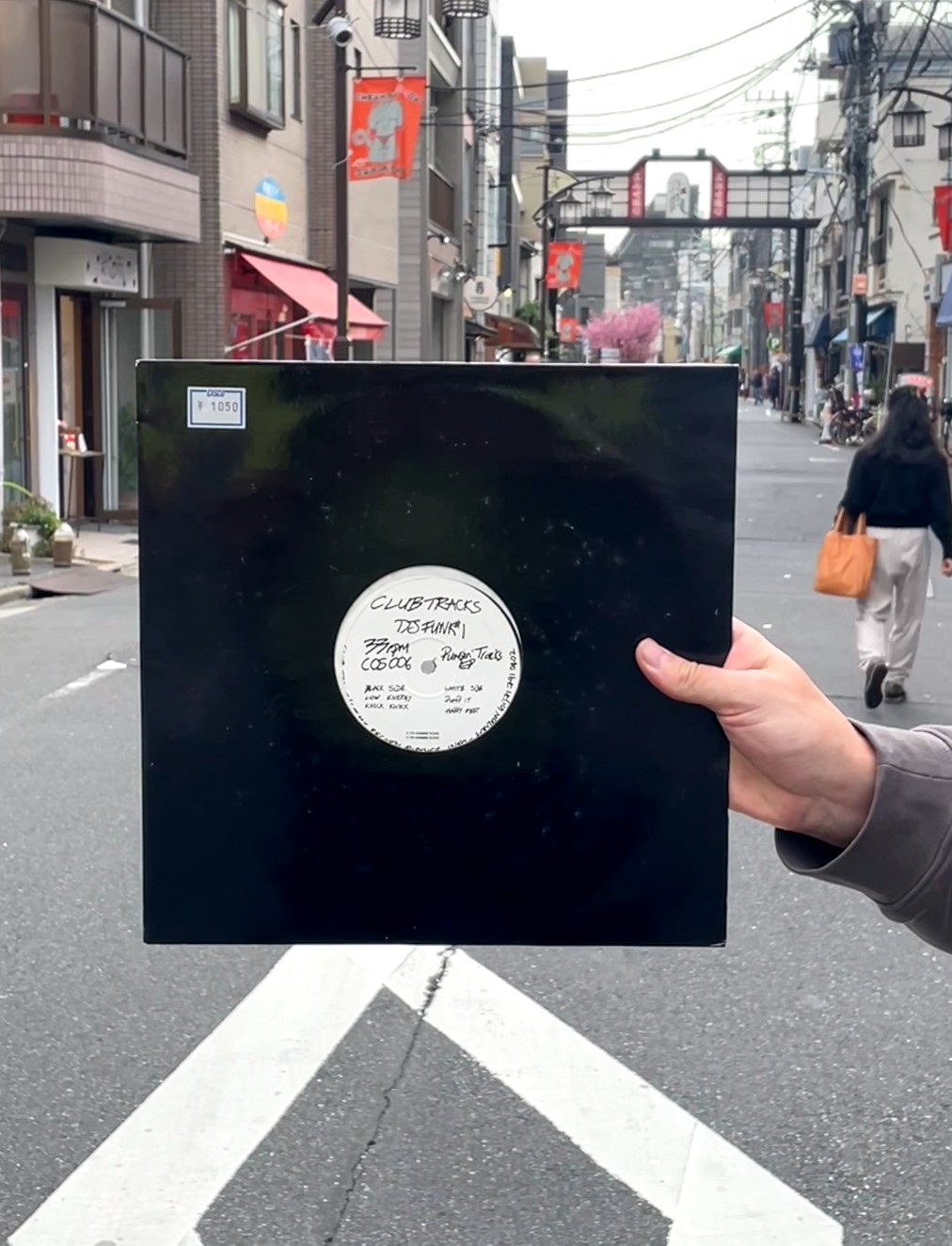
    Sadness and tragedy aside: Out of the 6ish DJ Funk records I bought in Tokyo, “Pumpin’ Tracks” is probably the most classic. It’s an amazing EP, whether you’re into this sound or not. Released in 1994 as one of Funk’s first, the EP probably qualifies as part of the early days of what people would later call ghetto house. The stand-out track – often sampled and remixed but rarely done justice – is of course “Pump It”. With its repetitive and encompassing bassline, its densely layered vocal chops, and its tight drums it rightfully qualifies as a foundational classic of the genre. 

    “Pump it” is really raw with all that the word entails. If you’d want to be critical you could say: Funk is still finding his footing – especially given that his later contributions have perfected this exact type of track, hold your attention firmly and still sound futuristic today. You can still hear the echos of late 80s TRAX records and the Hip House wave in it. If you’d want to be charitable, though, you could say: This track bangs! It is bursting with energy and innovation, and still works well in DJ sets today.

    Beyond “Pump It”, I find the remaining tracks on the EP even more interesting. They are the kind of distorted, repetitive, functional, jackin mid-90s drum machine workouts that get less shine than the hits with the well-known vocals. But they truly embody the rough essence of this era in Chicago music. “Happy Feet” and “Low Energy”, which delivers anything but, follow a classic Dance Mania formula: Distorted drum patterns combined with simple bleeps, occasionally pitched up or down, sometimes thickened with a 303 bassline. A recipe as simple as it is enduring.

    “Knock Knock,” my favorite of the bunch, even forgoes the rudimentary notes and derives all its head-nodding potential from a short loop of swingin’ percussive hits that should get old but somehow doesn’t. Rarely does a track without a melody become such a favorite of mine, but this one made it.

    “Knock Knock” is a good symbol for that entire era of early unpolished ghetto house: It does a lot with very little, because it knows that very little can be enough. While there is obviously so much more to say about the legacy of these Chicago legends, their significance to me, and also about Cosmic Records – the UK label that released this EP and a few others by Chicago OGs in a rare and fruitful burst of early transatlantic cooperation – I have to let myself be inspired by the holy ghost of DJ Funk on this one and not overdo it. This text is rambling enough as it is, and you hardly learned anything about digging in Japan. Oh well. Like and subscribe.

    RIP DJ Funk!

  • Player One – Different Strokes (1999)

    Player One – Different Strokes (1999)

    Alternative title: Another crap night out in Oberschöneweide

    Ravi McArthur is a true diggers’ darling, and I only mean that half disparagingly – look at any of the two dozen-ish releases he’s been involved in on Discogs, and even if it’s not pricey (yet), its “wants” will most likely outweigh the “haves”. And while I am often bemused by the swarm’s decisionmaking process about which obscure and mediocre late 90s Tech House person is next in line to become highly sought after among Hoppetosse heads and CdV creepers, I can fully understand why McArthur’s incredible run of 12”s from the mid-90s to the mid-00s has struck this kind of chord. Take this example: This guy (together with longtime collaborator Tom Gilleron) made a House record named The Poon Tang Clan – How Deep Is Your Muff? and it’s not just good but GREAT.

    So why do people love the man’s work? McArthur’s tracks often manage to thread the needle between classic Deep House sensibilities and sparse, minimal arrangements that can Tech-House it up with the best of them, while alluding to elements from 90s Breaks business, UKG and Electro House in a calm and collected way that does not seem gimmicky. And of the many amazing tracks McArthur produced, “Another Crap Night Out In Eltham” is my favorite.

    Recordselling my soul

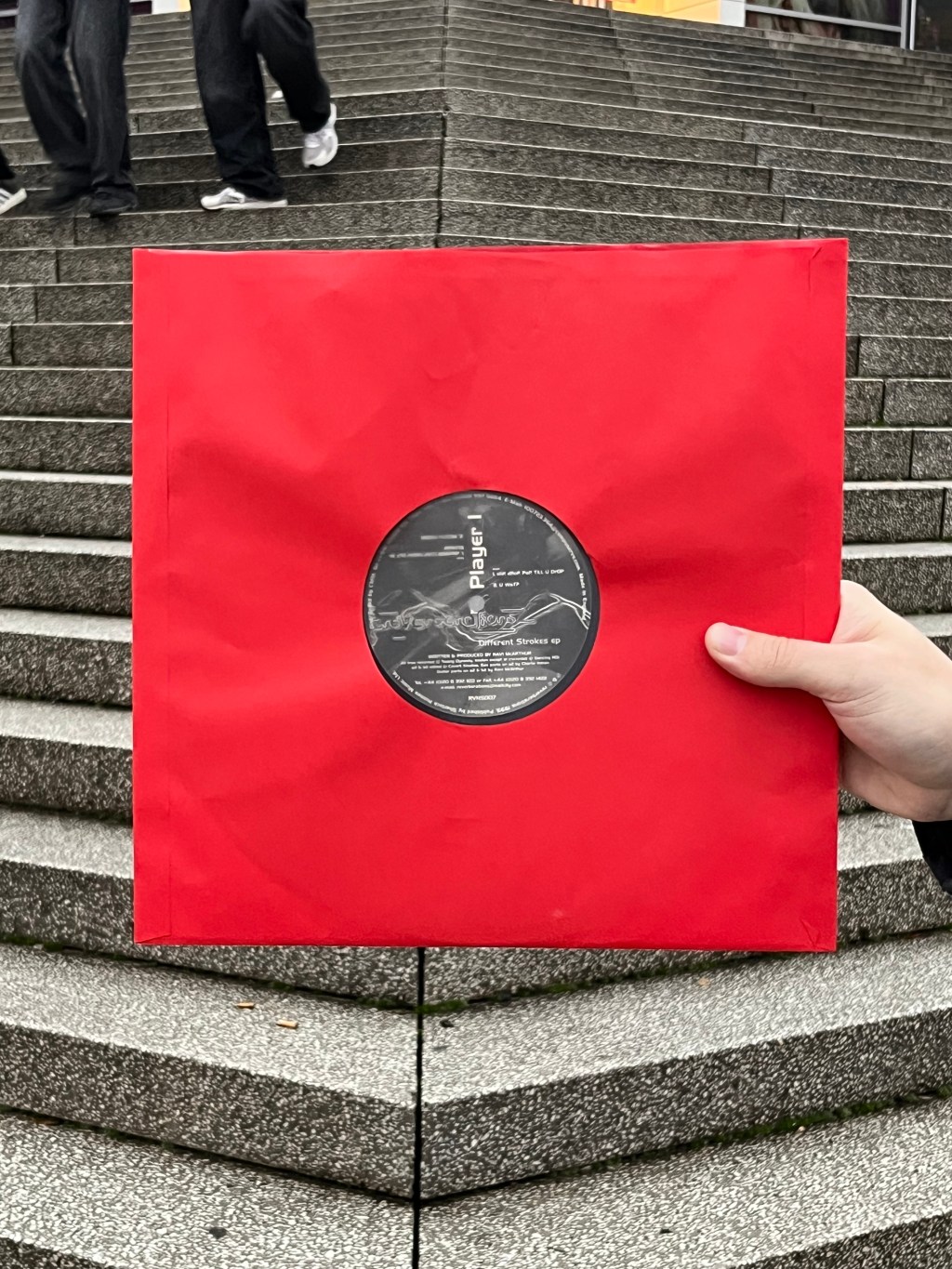
    I knew none of this when an original copy of Different Strokes by McArthur’s Player One alias fell into my hands at Recordsale, the Berlin-based record selling sweatshop at which I used to spend my days back when I still aspired to be a music journalist and to smoke weed all day. The task was simple: We had to go through crates of records, find them on Discogs, grade their condition and put them in the system to be sold. It was around that time that I started to get enthusiastic about deeper House and Electro, after being consumed by Hip Hop, Disco, Funk, Jazz and such for years. At that point I was pretty excitable. Give me a smooth Rhodes-y chord progression and I’d probably buy that record for our employee discount, which was fifty percent at the time – or a hundred, depending on who you talk to.

    The working conditions at Recordsale sucked for many reasons, but the vibe among us employees was great, and it wasn’t just the discount and the digging opportunities. I met so many people there who ended up being formative for not only my time in Berlin and my “”music career””, but my development as a person. I remember being introduced to so many things there, like Joe Claussell by the legend Dimitry, to Italo Disco through sessions with Jan, to incredible Reggae Disco bangers by magic man Bogdan, to the depths of late 80s House by my dear friend and early party collaborator Ali, and to Baltimore Club and UKG by my dear friend “Piano Chris” aka Bob Ross from Friends.

    Funnily enough, when I picked this record out of some crate I was working on, it wasn’t for “Another Crap Night Out In Eltham”, the objectively monumental slam dunk of Different Strokes, but for “U Wot ?” – a Disco’d-out breaks-y House sleeper with smooth chords and an incredible moment when a some horns come in around 1:50. I just rediscovered this one today and was pretty stunned. It’s funky, it’s class, and it pales in comparison to the magnetic “Another Crap Night Out In Eltham”, which I fell in love with in the years after acquiring the record. 

    “Eltham” is minimalist yet expressive, it’s percussive and tooly, yet full of melodies, it’s moving forward yet melancholic. It builds slowly but decidedly, and when that stab fully kicks in it’s pure ecstasy. I have so many fond memories of playing it out (which given how pricey the record has become I should probably stop doing) but I’ll talk about the first one.

    Crap night chronicles

    The first time I remember bringing the record with me, it was at this event, where our Ghetto-House-inspired label/ collective was unexpectedly asked to take over the night programme of Future East, a lovely festival that showcases mostly Middle-Eastern experimental music. It was a great opportunity to see Istanbul Ghetto Club, and to invite some friends and colleagues like Acidfinky, Zeynep, and Mehmet Aslan to play for us, but it was a bit of an odd vibe. Musikbrauerei is huge, and everyone had just witnessed some amazing live concerts. There was some proper Techno-ing happening downstairs in an arch of the building, but our upstairs floor took a while to get going.

    More annoyingly: This was at a time when I pretty much only played records. I did not know at all how to use Rekordbox, and only owned a handful of digital tracks. Imagine my disappointment, when I wanted to mix in the first record in a B2B with Young Lychee, and the booth was simply not isolated whatsoever, resulting in the worst needle skipping I’ve probably ever witnessed aloud. We ended up managing digitally, at least that’s what I remember. But that also meant: I couldn’t play “Another Crap Night Out In Eltham”.

    Luckily, this wasn’t the only gig I was set to play that night. After this one we were supposed to play together at the magnificent Kaos in Oberschöneweide, where our dear friends and label-mates Turk & Fin organised a soli-party with their Some Lush Frequencies collective. After we finished up the set, Bob/ Lychee spontaneously decided to stay, so I swiftly jumped into a cab all the way to the other side of town to make it JUST in time for the gig. I remember being very excited to play some classic House, and I started with Plez’s “Can’t Stop (Acid Rain Forest Mix)” which with its hypnotic bassline let me forget all about feedback noise. 

    Fast forward to halfway through the set, when I decided it’s time to cue up “Another Crap Night out in Eltham”. The record starts percussive and minimal, and I remember that moment when chords first start coming in not hitting the Kaos-dancefloor as I hoped. But boy, when that stab sound slowly creeps in during that breakdown, always just a little more muffled than you want it to until JUST before the drums return… real movie magic.

    Throughout the set I was pretty worried about my performance, more than usually. One of the reasons was that legend Stella Zekri, who was already popping off at the time, was hanging out on the dancefloor. Her and the SLF crew go way back to legendary parties at Zigraer Strasse, and she was playing before me on this one as a favor. Either way: I have a vivid memory of this track really hitting, which gave me the confidence to initiate an extensive hang afterwards.

    Sitting around some table in the middle of this huge warehouse, we simply talked about music with clenched jaws and big smiles for hours. We talked extensively about Newcleus and early Hip Hop, and when we were about to head back to the dancefloor I remember us being like “Nah, actually let’s just talk about music more”. And that’s what we did until the sun came up and I was booty-called to Neukölln where I drunkenly crashed into a table and spilled tea over some really nice photo books. Great night!

    Stalking a British man on the internet

    Memories aside, what is Ravi McArthur doing now? It’s been around 20 years since his last release, he does not seem to DJ anymore. What is he up to?

    Well, he’s happy. Or at least he looks happy on his profile picture in what I’m fairly certain is his LinkedIn. And why wouldn’t he be? He seems to be an in-demand tech professional in the Greater London area with a great career behind him. And he produced some of the best electronic music ever made. I’d be smiling, too.

    While googling around for this text, I stumbled upon this IG-post by McArthur’s peer Asad Rizvi, now known mostly as Silver Linings. In the text he describes hanging out in Friedrichshain as part of a Euro-tour by the Reverberations-boys in 1998, hitting an Imbiss and the like. I’d like to think that just a few hundred meters from where I’m writing these words now, some young bright-eyed producers ate some shabby Berlin food for a couple of Marks, blissfully unaware that they were in the process of creating some truly touching art, which would reverberate almost 30 years into the future.

    PS: Didn’t know where to fit this but our man did an official loungy Disco House remix for Robbie Williams’ “Rock DJ”, which is probably among the middest things he ever did, but If that is not a fun fact I don’t know what is.
    PPS: When I recently played this record at Cologne’s Gewölbe, it popped off, as it always does, and I remember my dear m8 Anatoli fka Play Boy Joe of Das Ist Das Ja collective running up to me and asking whether I’d spent 300€ on this one. I didn’t but honestly I probably would.

  • Cora und die Popspatzen – Wie wär’s mit Schulfreiem Montag? (1980)

    Cora und die Popspatzen – Wie wär’s mit Schulfreiem Montag? (1980)

    Kool Herc forgive me for I have sinned: I am obsessed with early 1980s Hip Hop from Germany. When the Breakdance craze first hit the old world through hit records played in GI nightclubs, everyone wanted in on the action, especially random Major-Label Schlager producers aiming to ride a wave they knew very little about. This mix between musical ambition, technical ineptitude and the obvious dissonance between the vibe of a regular 1980s German person (stuck up, rule-abiding, bad vibes) and the vibe of one of these original early Hip Hop tracks (loose, generally chill, good vibes) created some fascinating, often terrible music.

    But the very best of early German and European Hip Hop turns these disadvantages into strengths – its inadequacies in production, storytelling and technical prowess making it more real and charming. And few records are as charming as Wie wär’s mit Schulfreiem Montag? by Cora und die Popspatzen.

    But in order to properly talk about this endearing record I want to bring up another record, with which Cora is in competition for the all-important title of “first German Hip Hop record ever released”. And of course,when I’m talking about Hip Hop, I mean that in the sense of Breakdancing, Scratching and colorful clothes just on the tail end of Disco, made for a society struggling to tell apart Kool & the Gang from Barry White. Well, while several records claim that spot for themselves (See for example: Cheeky’s “Erste Deutsche Scratch- & Break-Platte“), as far as I know there are two releases that actually compete for the title, having come out in the same month of 1980 – and both of them are novelty cover versions of extremely popular early Hip Hop tracks.

    No. 1: Rapper’s Deutsch by G.L.S.-United

    This particular record is somewhat dear to me, because it is the ultimate cash-grab novelty Breakdance record, one of many that started flooding the German market around that time. It has so stunningly little reverence for Hip Hop and its origins that you have to kind of respect it.

    Basically, three Radio- and TV-hosts popular in 1980 “cover” Rapper’s Delight by the Sugarhill Gang. Meaning they rap their own vocals on top of the iconic backing track, in which they discuss the different types of Rock music they like. Frank Laufenberg likes 60s Beat, Manfred Sexauer likes 50s Rock’n’Roll, Thomas Gottschalk – who went on to become probably Germany’s most popular entertainer for a little while, and is by all accounts a massive asshole and a creep – likes New Wave.

    The whole thing is kind of a disaster, it sounds like they only did a few takes and none of the three have ever used their voice rhythmically in any capacity. However, Rapper’s Delight’s funky bassline and catchy progression carry even the most arrhythmic middle-aged Germans, so it somehow still goes down alright. However, I’ve not listened to my copy in probably around 6 years. If anything, I’ve pulled it out to show people that “Thomas Gottschalk, who we used to watch on television when we were children, made an early Hip Hop record, and it sucks!” It exudes novelty on a scale so great that you don’t even need to play it.

    No. 2: Wie wär’s mit Schulfreiem Montag? by Cora und die Popspatzen

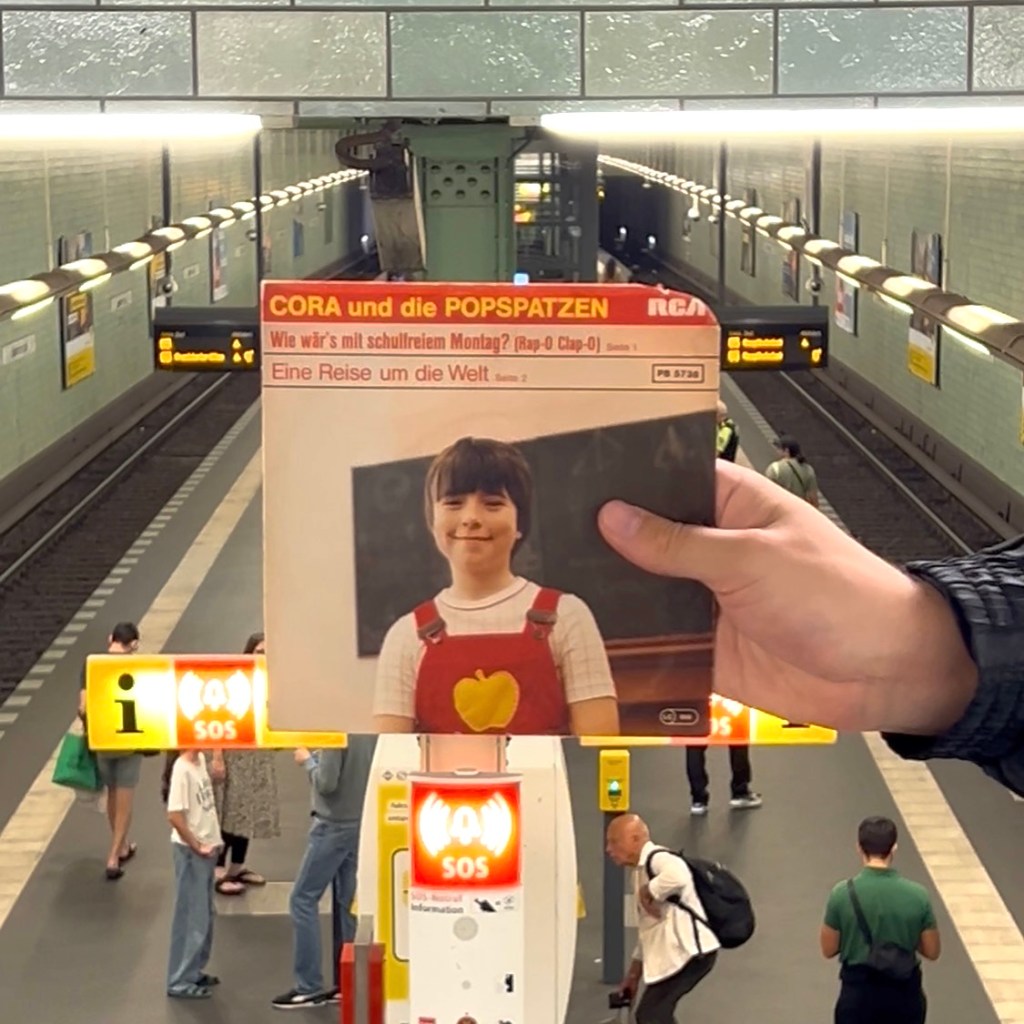
    Wie wär’s mit Schulfreiem Montag gives an insight into who record executives wanted to market Hip-Hop to at that time: Children. It is possibly the first in a long line of novelty Hip-Hop records for kids that were released in the first half of the 1980s. Pick up a random kids movie soundtrack or a compilation of children’s music from around that time, and chances are you will find a crisp drum computer pattern paired with slightly rap-adjacent vocals.

    Cora is a young girl who relatably wants nothing more than taking Monday off. And in order to achieve that goal she covers Joe Bataan’s seminal Rap-O-Clap-O with her “Popspatzen” (Pop sparrows). This is probably top 5 in the “most charming records I own” bracket. Obviously, this is a presumably 9-year old girl. But she certainly delivers her rhymes better than all three middle-aged radio talk show hosts combined. The mundane topic of the vocals perfectly gels with the moody-yet-terribly-danceable chords of Bataan’s noodly Disco-Rap-Classic. The dissonant kids choir in the song’s chorus packs a punch. Everything might be slightly repetitive, but the song doesn’t overstay its welcome. A lot of people might wave their hand at this. But for a highly specific set of idiots, which includes me, it doesn’t get much better than this.

    Funnily enough, I always thought that this release was produced as a cash-in by some seasoned producer on a Tuesday before moving on to the next NDW-Schlager, but actually the story is stranger: In 1970 Marcel Schaar contributed a few vocals for the Krautrock classic Delusion by Swiss band McChurch soundroom, then released his debut LP Dreams Consumed (Engineered by Kraut godfather Conny Plank!) to no one caring before he disappeared for a couple of years.

    He returned to RCA in 1977 with a childrens LP by the aforementioned Popspatzen, which looks like it had little commercial traction. Three years later, out of nowhere, the Rap-O-Clap-O cover, which was possibly his last foray into publishing music. These days he apparently lives in Neu Wulmstorf in the north of Germany, where he fronts “the top band of the German country scene” and plays local events. As of eight years ago, he’s still publishing songs about pubic hair on his SoundCloud. Maybe I should drop him a message.

    I am unsure how I first found out about Cora’s plea for the four day workweek, it might have been through some Facebook post, from which I added it to my Discogs wantlist 9 years ago. Ever since, the 7” was out of my reach and high on my wantlist. Initially I just didn’t want to spend 25€ on a children’s record, then it just never showed up for sale and ballooned in price. Given that it was released on RCA it seems to be surprisingly rare, and due to its special-interest nature copies were always snatched up quickly.

    Yet, I just kept getting this damn song stuck in my head. And I don’t even like Rap-O-Clap-O that much, like it’s not even a top 10 Joe Bataan song. Sidenote: There is even another German cover version of Rap-O-Clap-O from 1980 but this one truly doesn’t hold the candle to Cora due to its very novel decision to have a fake opera singer sing the hook, which is not to say that I don’t own it for archival purposes.

    Either way, ages passed and I had given up hope on a copy. I started digging further into electronic music, faded out my regular bar gigs, which I used to do every other weekend for cab fare and unlimited fancy cocktails all over Berlin, and with that pretty much stopped buying 7”s altogether. The chance to get in on Cora and her Popspatzen seemed past. UNTIL I turned 30.

    For that occasion I organised a little outdoor rave around that classic Open Air spot at Jungfernheide, invited all my friends, and had an absolute blast. At that party, my dear old friend Max Harder aka Wachs Max aka Discoprinz aka one of the nicest people I ever met showed up with not one but two gifts. While the music was playing and people were sniffing drugs laying about on blankets in the dust, Max first handed me a book. It was the legendary Berlin Graffiti-biography Odem – On The Run. I had never actually owned a copy, but this book had still been foundational to my teen fascination with painting things. This was already an insanely great and thoughtful gift. And then, this madman whips out Cora Und Die Popspatzen – Wie Wärs Mit Schulfreiem Montag? and my mind is blown. Like, I knew that he had a copy, but this was a 100€ record at that point.

    Since I have received this, I have to be honest, I have only played it a couple of times at home. I just rarely get the chance to play this kind of music out at the moment. However, I feel like by owning this forever-want, I ALMOST closed the chapter on my obsession with collecting early German rap rares — even though I know there is much more to discover, of course. Now all I need to find is a copy of “Ich bin Durchsichtig” and then I am sure there will not be another record to obsess over ever again.

    PS: Oh, the B-side I was very excited to listen to since from what I can tell it was never uploaded anywhere. Was it going to be another banger? In short, no, it’s a serviceable country-tinged melancholic kids song about travelling the world. It’s fine, really.

  • Dougal & Gammer – Pump Up The Noise (2003)

    Dougal & Gammer – Pump Up The Noise (2003)

    Alternative title: How I learned to stop worrying and love being dumb.

    Who reads blog texts these days? Well, at least one person I guess (that’s you!). Still, you probably know you’re not in the majority, and that’s why I’ve thought a lot about how to kick things off around here. I’d love to use this space to speak about musical passions that I don’t get to showcase much as part of my DJing, but I also don’t want to alienate people who know me for high octane late night hazy closing sets by immediately talking about sleazy Disco made by Krautrock survivors in the mid-80s. We’ll get there, though, don’t worry.

    While I generally want to dedicate each blog entry to a single record, my initial idea for getting this thing off the ground was to start with a numbered list early in the year 2026: “These are my top 10 most played records of last year”. I’d write 2-3 paragraphs per record and get people hyped for more in-depth content, while flexing my rhetoric muscles and showing off my vast inside baseball knowledge.

    However, you’ve seen how long this text about a single record is, and you know very well that it isn’t early January anymore. List season is over and I simply love being wordy too much, so a popular listicle is off the table. Instead, I thought I’ll start with what is probably the most iconic track from my bag in 2025. The track that has released the most endorphins in my body (and possibly yours) over my entire DJ “career”, “Pump Up the Noise” by Dougal and Gammer.

    Happy Himbo Hardcore will never die

    I am a firm believer that for every person there exists the right cult, scam, gambling opportunity or all-encompassing hobby that, if introduced at the right moment, will make them swiftly and willingly throw their life away. That is why I always feel a lot of empathy towards anyone who falls for these things, because I know I am literally one friendly conversation away from blowing every bit of money I have on some esoteric MMORPG inspired by Flamenco or crypto currency, or, worse, become a bike guy. With this preamble I ask you to feel some empathy towards me for how much I love and how often I have played this certified dumb guy track.

    As a certified dumb guy, ”Pump Up The Noise” is easily among my favorite tracks in the world. There’s few feelings that come close to the ecstasy of that breakdown, that simple glorious melody so catchy I can imagine a packed football stadium chanting along to it while it’s stumbling towards euphoric inevitability. Let alone that the whole track with its pitched up generic rap sample is such a joy to mix. When Hihat first introduced me to it, I heard it in the drunken blur of one of our closing sets, probably liked it, but didn’t think more of it – until I started randomly waking up multiple times a week with its lead melody stuck in my brain. Inevitably I jacked it from him, and have been tormenting crowds and dancefloors with it at almost every set around that tempo in the year 2025 – see Hihat’s & my Fusion recording for example, or also Young Lychee and me rinsing it on Rinse France.

    This text is probably not the right place to get deeper into Dougal & Gammer – their joint discography and individual discographies are simply too vast and too mixed for me to claim that I could give a proper overview, let alone a sizzling hot take on them. I will leave it at this: You don’t survive this long in such a volatile business as the hardcore business without adapting – which can lead to some duds that haven’t stood the test of time. The two of them put out such a vast amount of tracks together, especially during the revival of Essential Platinum (2002), some of which is among the greatest moments of synthesis between mid-90s Happy Hardcore, later Happy Hardcore, trance and big room sensibilities, but some of which I would not touch with a 175 bpm ft pole.

    In this case the stars aligned: Between Dougal’s 90s sensibilities, Gammer’s ear for a catchy melody, and what feels to me like the hardcore scene’s desire for slightly less cheesed up alternatives in the early 00s, “Pump Up the Noise” never sounded fresher, and you can expect to hear it at another hundred gigs from me.

    That would have been a good end to the text, at least that’s what I thought. Until I realised that I wrote about the B-Side the whole time, and practically forgot to say anything about the A-Side: Dougal’s & Gammer’s remix of “Jam the Nightclub” is, you know, alright. 

    The original version of the track by Dougal & Reality has become a staple in high energy sets of HiHat and myself, and I still really love how well its melody works with its Darude – Sandstorm style synth. It’s not “Pump Up The Noise”, but it works as a sort of companion piece to it.

    Dougal’s and Gammer’s version replaces the Darudishness with the full on brash and bright synths you’re thinking of when you think of 00s Happy Hardcore, thus sacrificing the original’s coolness on the altar of cheese. It also adds a fun bass sound that feels almost DnB-coded, but for me the damage is done. This remix is fully representative of the kind of technically proficient but in my view often forgettable track that came out in the mainstream days of Happy Hardcore on labels like Essential Platinum, Raver Baby, Next Generation Records, or, to some extent, Quosh – in the sense that I can respect how well its production shoves the emotional square waves down your throat with an extremely high energy level, but it’s missing fun, depth and a connection to its foundations in 90s UK Hardcore.

    If I’m honest, though, even if that track was solid gold, I’d be sitting here rationalising why I never play it in favor of my favorite dumb guy track. SORRY!

  • Welcome to my Bloghouse

    Welcome to my Bloghouse

    I’m so glad you made it!

    My name is Niklas, I live in Berlin, and you might know me as “DJ Fucks Himself” depending on how you came across this page. I love music, and I also love reading and writing about music.

    On this blog, I want to create an archive of texts dedicated to specific records that have had an impact on me. My goal is to use these texts to not only dive into what makes these records special on a musical level, what their relationship is to certain genres and movements and whatever, but to talk about what makes them special to me. Where did I play it out first? Who showed it to me? What godforsaken Berlin flea market did I find it at while still awake after some mediocre party?

    Ideally, I’d love this blog to be part anecdotes, part passionate pleas to hit play on that YouTube-embed, part reflections on the “scene” and part incentive for me to stalk some 90s producers on LinkedIn or wherever they are now. And if you’re one of the 30 people worldwide to whom that sounds like a good time, I’m really psyched to have you on board.

    Before diving in further, let me address the question on everyone’s mind: “A blog? What is it, 2011?”

    No, it’s not 2011 unfortunately

    In short: Sure, why not! I know that in 2011 I was definitely spending way more time reading about music than I do now. I love the medium. I believe there is too little music writing around nowadays, especially about things that aren’t “current thing”. And I feel like writing little subjective texts about records is the best way for me to engage with other nerds who love this kind of stuff, even if it’s just 10 other people. And for me it sure beats “Hey Guys”-ing my way through some vertical video content – though please don’t call me a hypocrite if I still do that.

    I used to write about music for a few magazines back in the 2010’s when I had aspirations to make a living as a music journalist. Sadly, that didn’t work out due to my lack of organisation and dedication (smoking tons of hash every day probably didn’t help). Once I faced the fact that I was not going to be hired for one of the 20-ish culture journalism jobs left in the country I withdrew not only from the writing, but also partially from what had instilled that vision in the first place: reading exciting texts about exciting music.

    It’s not like it was a conscious decision, more that I felt freed from the burden of an ambition that forced me to keep up with the most recent Miley Cyrus thinkpieces. With record digging becoming more of a focus because of DJ gigs picking up, and my own music production, event organising and label work taking more and more time towards the end of that decade, I left the music longread by the wayside and rarely looked back. Until last year, when at a posh Hamburg wine bar, I was recommended the fine dining blog trois etoiles.

    On paper this wasn’t supposed to be too exciting for me. I like nice food and good restaurants as much as the next guy, but I was never curious or wealthy enough to really dip my toes deep into the world of Michelin stars and snobby reviews — and yet I became fully obsessed with this bougie review blog about Michelin-starred restaurants. For a full weekend I was fully caught up in reading about food I’d likely never taste or afford, but that wasn’t the point. The point was discovering this treasure trove of text that passionately divulged all this highly specific information while staying strictly subjective.

    It threw me back to a world in which I spent each day devouring nerdy Blogspot posts and forum threads on highly obscure 70s records. The experience of getting fully sucked into a blog of all things lit a certain fire in me again, and it gave me hope for the medium in general. If I could become obsessed with reading hundreds of restaurant reviews, maybe at some point in the future someone would enjoy stumbling over my texts – especially given that there really isn’t an infinite amount of writing about the kinds of music I like on the internet – and spend a weekend slurping up my texts about obscure records?

    Around the same time another big inspiration entered the picture: I became an avid reader of Joe Delon’s newsletter. To be honest, I had not been familiar with his work as a DJ or curator or his label Welt Discos, but I think someone shared his mention of a certain release on Twitter or IG, and I just entered my email address and became a follower, because why not, I already have 13.101 unread emails currently, might as well add some more to the pile. I can’t put my finger on what it is, but I became completely enamoured with his approach to writing about music and DJing. 

    The first thing that caught me was his honesty. I think I have become so used to the Instagram way of “wow guys what was that thanks so much for that incredible energy”-ing your way through even the shittiest experiences, that Delon transparently talking about the highs as well as the lows of existing in that field, even mentioning his own failings, is incredibly refreshing. On a related note, he writes about all of these amazing gigs he gets to play in such a humble and plain way that it demystifies them at the same time as reminding you what’s really great about nightlife: Listening to sick tracks on a good system with all of your friends at once. Making new friends. Delicious cocktails. The tech actually working as expected. And yet, no matter how hard Delon tries through his humble demeanor, he can’t downplay how knowledgeable he is about music. 

    Not only have I stolen so many great tracks from his newsletter, but through his descriptions of other people’s sets, or him mentioning a track that appears to be buzzing at the moment, I get the feeling that I know what’s actually happening in his corner of music world. If I can rip off his schtick only a little bit and give some people a similar feeling, I’ll have happily achieved what I wanted to achieve with this.

    Other honorable Mentions

    The Blogosphere ca. 2008-2015: In the heyday of Blogspot, Rapidshare, Megaupload and forums I spent every day browsing obscure blogs to download rips of rare library records, oddball jazz and forgotten funk — and also to read what people had to say about it. There were so many of them, and I have forgotten most. Aquarium Drunkard comes to mind, Voodoo Funk, or the librarymusicthemes forum. Most of these pages are lost to memory. I’d love to stumble over some of them with defunct zippyshare links and angry fights in the comments.

    Opium Hum and his Hyper Real Radio Telegram group: Michail has always been an inspiration and a supporter, but witnessing him withstand the constant onslaught of new music releases in dozens of genres of (not only electronic) music is a thing to behold. His analysis is always on point, and his tight teasers manage to get me excited for things that I’d never thought I’d be excited about.

    “Techno Twitter”: Whether it’s corny DJ discourse, hyperlocal promoter beef, exciting new releases, or simply laughing together about the corny mainstream that we all don’t want to be a part of – it’s all possible on X, the everything app. I have lurked on the sidelines for around a decade and am hoping that this project will inspire me to take the leap into posting waters (follow here to exert some pressure), but it has been great to see a less polished side to a lot of artists I admire over there. Call it the Elon-effect but after years of a pretty solid algo, I now keep getting shown US EDM Brostep discourse. I even had to learn what they mean by “Riddim”. That’s almost as bad as being shown fascists all the time now, right?

    Substack: Following my infatuation with Joe Delon’s music writing I tried to seek out more independent music writers and got lucky on substack, of course. From writings by established voices like Call Super or Nono Gigsta (who I think has moved away from the platform now), to established writers such as Shawn Reynaldo to nerds like Vincent Jenewein to ambitious projects like Untitled909 or Tone Glow, the scope of which far exceed anything I expected on that platform. Finding out about the vastness of music writing on Substack is intimidating, but also shows that people still care, that they are still out there wanting to read and write about oddball music.

    Tris: Without my dear friend Tris, whose Substack you should follow right here, you wouldn’t be reading these pages. Thanks for all the support, motivation, criticism and drinks.

    If you’d like to stay on track with future posts, just subscribe to my newsletter or check my socials, where I will do my best to bury this thing I really care about.